Black Genealogy Newspapers: Finding Ancestors Between Lines

Tuesday, February 10, 2026
Your ancestors didn’t just exist in records. They lived full lives—and newspapers quietly recorded them.
When people think about genealogy research, they often picture census records, birth certificates, or maybe an obituary clipped from an old scrapbook. But for Black family historians, newspapers are one of the most powerful and underused sources available. Long before many of our ancestors were fully documented in official records, newspapers were quietly recording their lives between the lines.
Newspapers tell fuller stories. And those stories matter.
Why Newspapers Matter in Black Genealogy
For much of American history, Black lives were overlooked, misrecorded, or excluded entirely from government records. Enslaved people were rarely named. Free Black people were often grouped together without detail. Newspapers, however imperfect, often captured moments that official records ignored.
You might find a short notice about a church picnic, a court case, a business opening, a school honor roll, or a community fundraiser. These everyday moments reveal something powerful: our ancestors lived full lives. They worked, worshipped, celebrated, struggled, and built communities.
Even when names are missing, context can be everything!
Looking Beyond Obituaries
Obituaries are valuable, but they are not the only place Black ancestors appear in newspapers. In fact, relying only on obituaries can cause researchers to miss rich details hiding in plain sight.
Here are some sections to explore:
Local news columns: These often reported who visited whom, who was sick, or who moved away.
Church and society pages: Black churches frequently appeared in both Black-owned and white-owned papers.
Court notices and legal ads: These may list witnesses, defendants, land sales, or estate matters involving Black individuals.
Employment ads and labor news: These can show occupations, skills, and economic conditions.
School and education news: Lists of students, teachers, and graduates appear more often than you might expect.
Each small mention adds a brushstroke to your ancestor’s story.
When I talk about looking beyond obituaries, I am not speaking in theory. I have seen the power of newspapers in my own family research. My paternal great-grandmother, Cora Bell Williams Woodard (1897–1957), appears in the Anniston Star at least 31 times. Thirty-one times. That number alone tells me something important. She was active. She was visible. She mattered.
The articles about her are not limited to her death. In fact, most of them have nothing to do with her obituary. They appear in church columns, community updates, organizational news, and social notes. Each mention adds another layer to who she was.
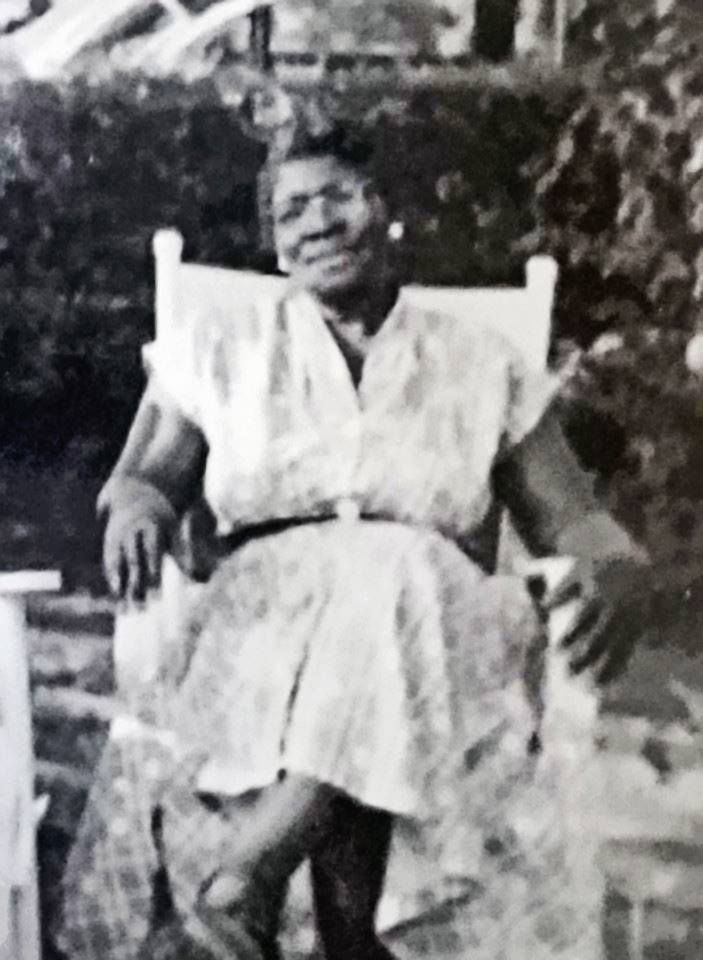
Cora Bell Williams Woodard was a native of Georgia. She moved to Anniston, Alabama, in
the 1930s, during a time when many Black families were searching for work, stability, and opportunity. Moving to a new city was not easy, especially for a Black woman in the Jim Crow South. Yet once she arrived, she did not simply blend into the background. She stepped forward.
Through Mount Olive Baptist Church, she helped create one of the first kindergarten classes in the community. That detail stopped me in my tracks. Kindergarten was not common in many Black communities at that time, especially in the South. Resources were limited. Schools for Black children were often underfunded. But my great-grandmother and others saw a need and did something about it. They made a way for young children to start learning earlier. She also created the first Boy Scout troop, where my dad and his cousins were the first members. That tells me she believed in education and in building something that would last.
Newspaper articles also describe her as a Sunday school teacher. That role meant more than standing in front of a class once a week. Sunday school teachers shaped values, faith, and discipline. They mentored children and supported families. In many Black communities, the church was the center of social life. It was a place of worship, yes, but also a meeting hall, a planning space, and a safe place to gather. Serving there meant leadership.
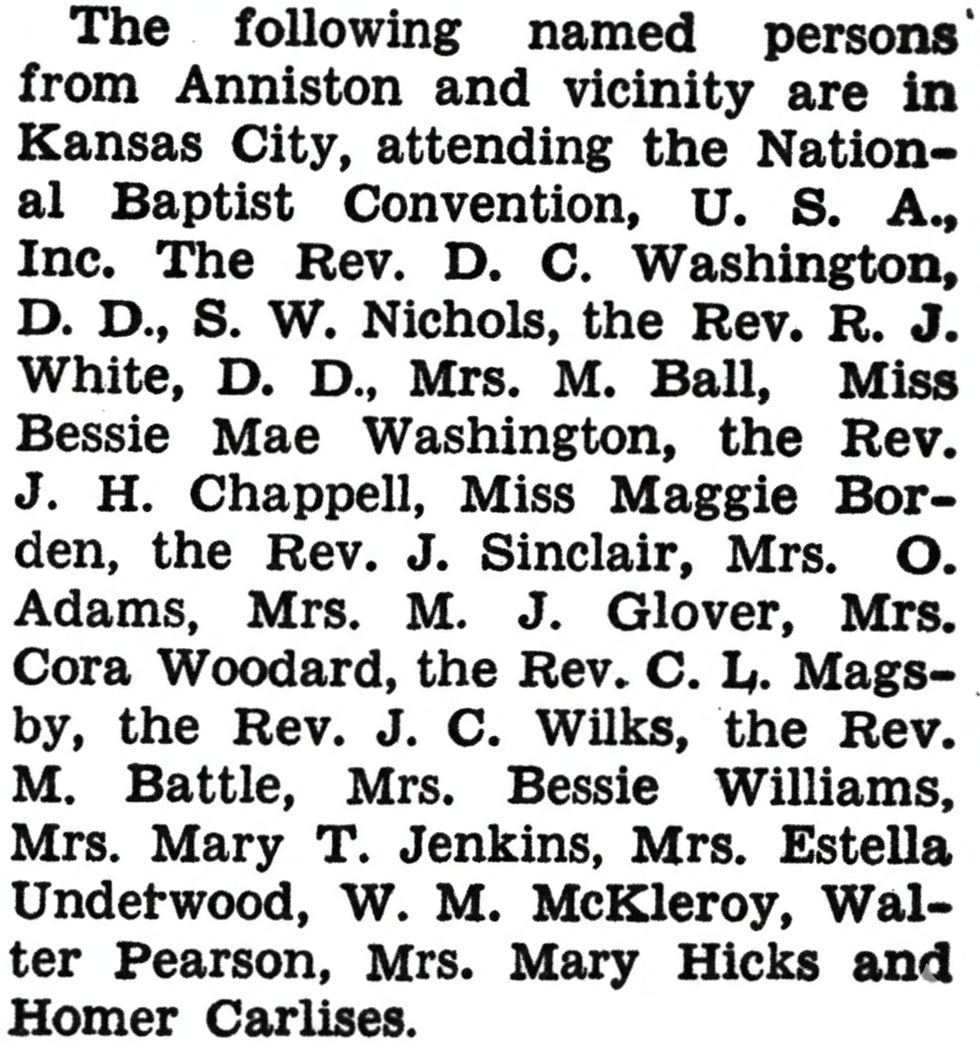
She was also a member of the National Baptist Convention. That organization connected Black churches across the country. Membership suggests she was part of something bigger than her local congregation. She understood that faith communities could organize, educate, and advocate on a national level.
Even more interesting was that she was a member of the NAACP. During the 1930s and 1940s, membership in the NAACP was not casual. It was an act of courage. Black citizens who joined civil rights organizations often faced threats, job loss, and violence. Her membership tells me she believed in justice. She was willing to stand for change. She also traveled to Kansas City, Missouri, and Washington, DC, to attend the larger meeting for these organizations.
When I piece together all these newspaper mentions, I see a woman who was more than a wife and mother. She was a community builder. She was a teacher. She was an organizer. She was a trailblazer in Anniston.
And yet, every time I access those newspaper pages, I feel something else too. I feel offended.
All of the articles about her community service and activism appear in a section of the Star titled “Activities of Colored People.” Seeing that heading in print reminds me of the segregation that shaped her life. Black achievements were not simply listed alongside everyone else’s. They were separated. Labeled. Boxed in.

The same newspaper that praised her work also reflected a system that treated her community as different and unequal. Even the language used in some articles can feel instant or patronizing. The page's formatting itself tells a story of division.
As a researcher, I am grateful. Without those newspapers, I might never have known about the kindergarten she helped establish or the organizations she joined. I would not see how often her name appeared in print. I would not understand how deeply rooted she was in her community.
But as her great-granddaughter, I feel the sting of history. I imagine her turning those same newspaper pages decades ago. Did she notice the section titles? Did she feel pride seeing her name in print? Did she feel frustration at the limits placed on her world? I will never know for sure.
What I do know is this: she lived fully in the space she was given. She created opportunities where little existed. She built institutions that served others. She helped shape young minds. She stood for civil rights. She left fingerprints across her community, and the newspapers proved it.

Those 31 mentions are more than clippings. They are evidence of impact.
Newspapers often reduce people to small paragraphs, but when those paragraphs are gathered together, they tell a powerful story. In my great-grandmother’s case, they reveal leadership, faith, courage, and commitment. They show a woman who loved her family and extended that love outward to her community.
I will always be offended by the labels and the segregation I see on those pages. But I will also feel pride and gratitude. Proud that her name appears again and again. Proud that she did not live quietly. Proud that she made sure the next generation would start school ready to learn. And grateful for the only opportunity to learn about this woman from whom I descend, because no one ever shared this information.
Reading those newspapers reminds me that our ancestors were never just statistics. They were organizers, teachers, believers, and fighters. Even in divided columns of ink, their strength shines through.
The Power of the Black Press
Black-owned newspapers are especially valuable. Publications like The Chicago Defender, The Pittsburgh Courier, and The Afro-American reported on Black life with care, pride, and detail. They covered achievements, injustices, migration stories, and community milestones that white newspapers often ignored or distorted.
If your ancestors lived in or passed through major cities during the Great Migration, Black newspapers can help trace their movements and motivations. Job listings, travel notices, and letters to the editor often explain why families moved and what they hoped to find.
These papers remind us that Black history was being written in real time by Black voices.
Reading Between the Lines
Not every mention will be obvious. Some articles use outdated or offensive language. Others may only reference a first name, a nickname, or a role instead of a full identity. This is where careful reading comes in.
Ask yourself:
Who is being discussed, even if unnamed?
What neighborhood, church, or workplace is mentioned?
Who appears repeatedly in the same column?
Patterns can point you toward family connections, community networks, and shared experiences. Newspapers reward patience.
Where to Find Historic Newspapers
Many historic newspapers are now digitized and searchable online. Some of the most helpful resources include:
Chronicling America (Library of Congress): Free access to historic U.S. newspapers.
Newspapers.com and GenealogyBank: Subscription sites with powerful search tools.
State archives and local libraries: Often host digitized or microfilmed local papers.
University collections: Especially strong for Black press publications.
Try searching by name, address, church name, employer, or event.
Bringing the Stories Home
When you find a newspaper clipping about your ancestor—even a small one—pause and imagine the moment. A wedding announcement. A labor dispute. A church anniversary. These are proof points of existence and resilience.
For descendants of enslaved people, especially, newspapers can bridge painful gaps left by slavery and segregation. They remind us that our people were not invisible, even when the system tried to erase them.
A Call to Action
This Black History Month, challenge yourself to go beyond the basics. Look past the headline records. Dig into newspapers. Read between the lines. Because our ancestors were there. They always were.
Preserving and telling our stories is an act of claiming space in history. And our stories are waiting to be found.
Sources
"Mt. Olive Baptist Church Activities." Newspapers.com. The Anniston Star, February 1, 1948. https://www.newspapers.com/article/the-anniston-star-mt-olive-baptist-chur/191204525/.
"Services Slated For Local Woman—Cora Williams Woodard." Newspapers.com. The Anniston Star, November 10, 1957. https://www.newspapers.com/article/the-anniston-star-services-slated-for-lo/191222982/.
Library of Congress. Chronicling America: Historic American Newspapers. Accessed January 2026. https://chroniclingamerica.loc.gov.
Miller, Edward A. “Using African American Newspapers for Genealogical Research.” National Archives Prologue Magazine. Accessed January 2026. https://www.archives.gov/publications/prologue.
Smithsonian National Museum of African American History and Culture. “The Black Press.” Accessed January 2026. https://nmaahc.si.edu.
Newspapers.com. “African American Genealogy Research with Newspapers.” Accessed January 2026. https://www.newspapers.com.


Comments