The Power of Heirlooms in Black Family History

Friday, February 20, 2026
Objects tell stories
Some families pass down land. Some pass down jewelry. Some pass down recipes written on stained index cards. And some families pass down something that makes people pause and say, “Wait… what?”
In my family, that object is "The Bullwhip."
When we talk about “material culture,” we’re really talking about the everyday things people used, saved, and carried—objects that can help us tell their life stories. Historians and museums use artifacts as “touchstones” for memory and storytelling, and family historians can do the same thing on a smaller, more personal scale. (Smithsonian Institution)
That’s why I always tell folks: before you spend money on another record set, go look in the closet. Go look in the attic. Go look in the cedar chest. Your breakthrough might already be in your house.
Meet My Granddaddy Buck

I was blessed enough to know my great-grandparents, Louise and Clarence “Buck” Walker. Having them in my life gave me something priceless: living memory. Names. Faces. Tiny stories that never show up in a census.
Granddaddy Buck was born in Blackville, South Carolina, in August 1905 to Jannie Franklin and Mingo Walker. He was a farmer his whole life. His father died when he was around nine years old, and because his mother needed everybody working, he never attended school. Still, he had a kind heart, a quiet spirit, and the kind of common sense you can’t teach in a classroom.
In my eyes, he was a big, lovable teddy bear.
And like many elders from the rural South, he didn’t always sit around telling long stories about the past. Not about his people. Not about pain. Not about the things that still felt too close.
But there was one “old thing” he did show us when we asked.
The Heirloom That Changed Everything
Growing up, my great-grandparents’ house had “old things,” and you already knew the rules: children do not touch them without permission. There was my great-grandmother’s doll—an antique sewing machine. Pretty goblets. Keepsakes with stories I was too young to understand.
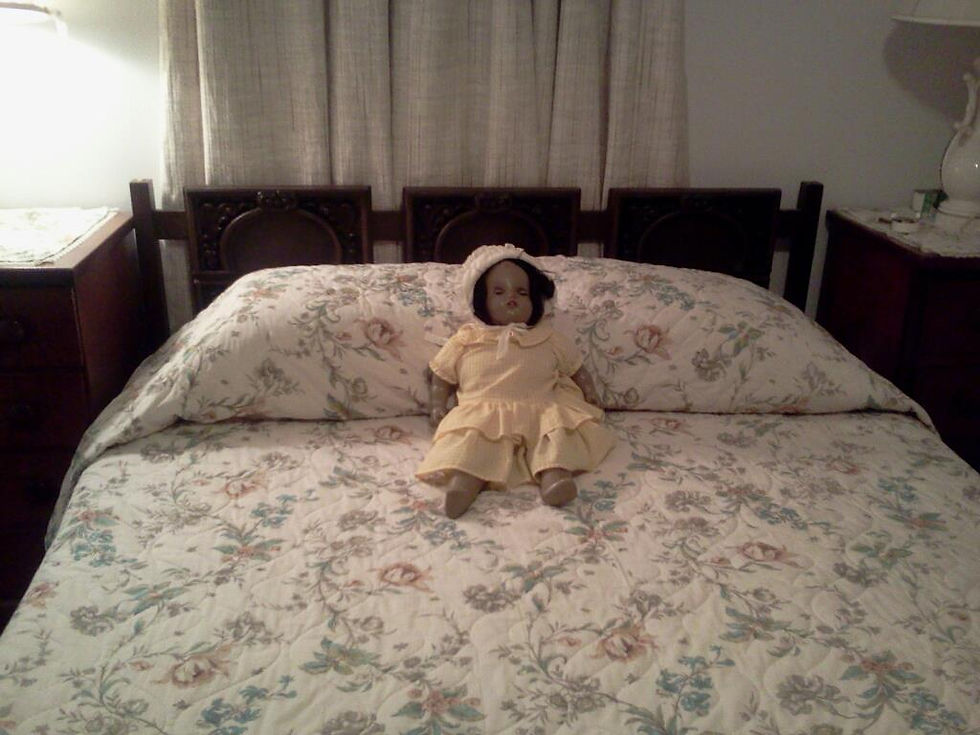
But the most unforgettable heirloom wasn’t pretty.
It was the bullwhip—a braided leather whip that, by our family’s best estimate, is over 160 years old.
Family folklore says it was handed down to Granddaddy Buck by his mother. The story goes that his father, Mingo, stole it from either the Mims or Walker Plantation, the same place where Mingo’s parents, Granddaddy Buck’s grandparents, and my 3rd great-grandparents, Jackson and Charlotte Walker, were most likely enslaved. The whip was linked to violence used against enslaved people, including their parents and others.
That’s a hard sentence to write. It’s harder to hold in your mind.
For a long time, the whip stayed in the trunk of my Granddaddy Buck’s car. If we asked, he’d show it to us and simply say it belonged to his father. No big speech. No lecture. Just… truth sitting there in leather and braid.

After Granddaddy Buck died, the whip was kept in the laundry room. Time did what time always does. The leather began to crack. The handle broke. Pieces started falling away. My grandmother tried to protect it—first wrapping it in cheesecloth, then sealing it in a plastic bag, and eventually placing it inside a bubble-style frame to slow down the damage.
That’s what heirlooms often need: care, protection, and context. The National Archives recommends simple steps, such as keeping items out of damp basements and hot attics and reducing handling to prevent damage. (National Archives)
Why Objects and Heirlooms Matter in Black Family History
For Black families, objects can fill in gaps that paper records refuse to answer.
Photos can identify people, places, and time periods—especially when you study details like clothing, locations, and who is standing next to whom. The Library of Congress even reminds researchers that photographs are records of our ancestors’ lives, not just decoration. (Research Guides)
And then there are family Bibles, which often include handwritten lists of births, marriages, and deaths—sometimes in periods and places where official recordkeeping was weak or inconsistent. (FamilySearch)
But a bullwhip?
Yes. Even a bullwhip.
Because this heirloom does more than point backward. It forces questions:
Who made it, and when?
What plantation was it tied to?
Who handled it—and why?
Why did Mingo steal it?
Why did the family keep it?
And here’s the part that hits me every time: its very acquisition is a form of defiance. Something used for terror was taken. Removed. Carried forward—not as a trophy, but as evidence. As a warning. As memory. As proof that our people lived.
It’s also a symbol of endurance. Multiple generations have seen it and touched it. They know the story. And as painful as that story is, it matters that we can tell it—because so many enslaved people were denied the right to keep anything, even their own names.
Try This: Turn Heirlooms into Clues
If you have an heirloom—any heirloom—try this simple checklist:
Photograph it from all angles (front, back, and close-ups of marks or writing).
Write what you know today (who owned it, where it came from, and what you were told).
Record an elder talking about it—even a five-minute voice memo.
Store it safely (at a stable temperature, in low light, with minimal handling). (National Archives)
Use it as a research map: names, places, churches, schools, military units, funeral homes, plantations, anything connected.
If you’re feeling stuck in your research, heirlooms can be the breadcrumb trail you didn’t realize you had.
And if you want a second set of eyes, that’s what I do. I help families turn “old things” into real leads, real records, and real stories worth passing down.
Sources
National Archives. “How to Preserve Family Archives.” National Archives, August 1, 2024. (National Archives)
National Archives. “How to Preserve Family Archives (Papers and Photographs): Storing.” National Archives, September 18, 2025. (National Archives)
National Archives. “Family Archives: General Guidance.” National Archives, July 25, 2025. (National Archives)
FamilySearch Wiki. “United States Bible Records.” FamilySearch, October 17, 2025. (FamilySearch)
Montgomery History. “The Family Bible in Genealogical Research.” Montgomery History (online exhibit). (montgomeryhistory.org)
Library of Congress. “People, Places, Events, Oh My!” Using Local and Family History Photographs to Tell the Story (Research Guides), December 5, 2025. (Research Guides)
Library of Congress. “Photographic Evidence.” Using Local and Family History Photographs to Tell the Story (Research Guides), December 5, 2025. (Research Guides)
Smithsonian Institution. “National Museum of African American History and Culture Fact Sheet.” Smithsonian Newsdesk, October 9, 2025. (Smithsonian Institution)
"Know from whence you came. If you know whence you came, there are absolutely no limitations to where you can go.” - James Baldwin


Comments